Second Home Loans: What Buyers Need to Know About Financing in Cape Cod
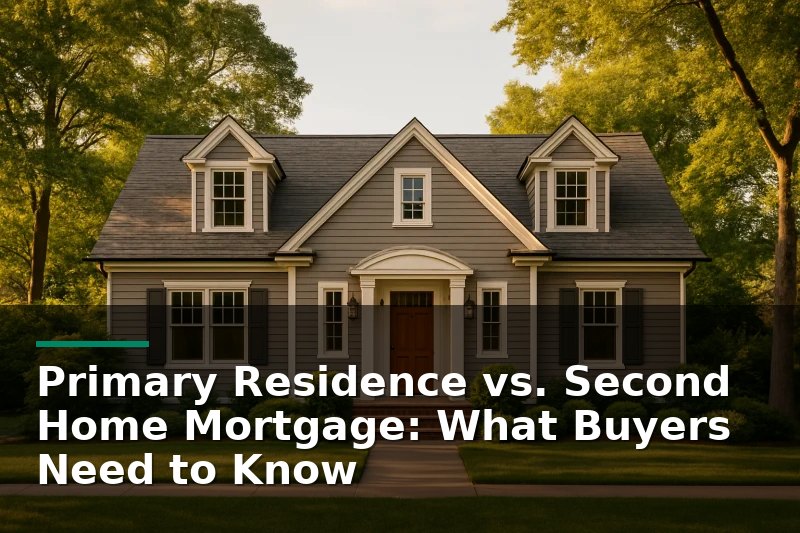
Buying your second home on Cape Cod can be a dream come true, though the financing process may feel a bit different than what you experienced with your primary residence. **A second home loan is a mortgage specifically for buying a property you intend to use as a vacation spot or part-time residence, not a full-time rental or investment.** In this article, I will walk you through the basics of second home financing, outline your options, and highlight what’s unique about purchasing here in Cape Cod and the surrounding areas.
Key Takeaways
- Purpose: Second home mortgages are for properties used as vacation or part-time residences, not primary homes or pure investments.
- Requirements: Lenders look at credit score, down payment, debt-to-income, and property use.
- Rates & Terms: Interest rates are usually a bit higher for second homes compared to primary residences.
- Best For: Buyers looking to enjoy Cape Cod, the Islands, or the South Shore as a getaway, or to split time between homes.
- Timeline: The approval and closing process is similar to primary home purchases, typically taking 30-45 days.
Quick Answers for Second Home Financing
- What qualifies as a second home? The property should be a single-unit dwelling, suitable for year-round occupancy, and lived in by you part of the year. It can’t be a rental you lease out long-term.
- How much down payment do I need? Standards vary, but most lenders require a larger down payment for second homes than for primaries, often starting at 10%, but options exist—let me show you some examples.
- Are interest rates higher? Generally, yes; lenders see second homes as slightly riskier, so rates are typically a bit higher than for primary homes.
- Can I rent out my second home? Limited short-term rentals are sometimes allowed, but if you plan to rent frequently or full-time, you’ll need a different loan type (ask me about investment property loans).
- What documentation is required? Standard income, assets, and credit documentation similar to a primary home loan—let me walk you through what’s needed based on your specific situation.
How Second Home Loans Work
At Mike Burton (NMLS# 3373), I work with many buyers who want a piece of Cape Cod, Nantucket, or Martha’s Vineyard to call their own, but aren’t sure how the process is different than buying their main residence. Ok, here is how the program works.
A second home loan is much like a conventional mortgage, with a few added considerations. The lender wants to be sure this truly will be a second home—not an investment or rental property, because those have different loan programs and requirements. The location matters too. Typically, your second home should be a reasonable distance from your primary residence (think more than driving distance for a daily commute). Most Cape Cod and Islands properties meet that expectation—just be aware if you’re shopping closer to home.
Basic Requirements
- Down Payment: Most lenders ask for at least 10% down, but some options allow for less with a stronger financial profile. Your exact requirement depends on the loan program and your scenario.
- Credit Score: A higher score usually helps, both for approval and better terms. Most programs require good credit.
- Income & Debt: Lenders will review your debt-to-income ratio to be sure you can handle both your main home and your new second home payment comfortably.
- Property Use: They’ll want assurance you’ll occupy the property yourself at least part of the year, not just rent it out.
Interest Rates and Fees: What to Expect
Rates for second homes are usually a touch higher than those for a primary residence. This is because lenders see a bit more risk in lending for a home you won’t live in full-time. Closing costs are typically similar to your prior purchase—there may be slightly different fees based on the program and location, including local Cape Cod property taxes and transfer costs.
You will have a payment of principal and/or interest of this amount. This is based on a loan amount of this and an interest rate of this. This is 1 example, we have many options to choose from. I encourage you to reach out and we can look at options side by side—sometimes 15-year and 30-year terms make a difference, and there are both fixed-rate and adjustable programs available. If you’re comparing options, you can also check out my fixed rate mortgage overview for more details.
What Properties Qualify as Second Homes?
- Single-family homes are most common, but a condo or townhouse may also qualify if it’s not part of a timeshare or subject to heavy rental restrictions.
- The property should be suitable for year-round occupancy.
- Typically, multi-family or investment-designated properties are not allowed under second home loan guidelines; if you plan to rent heavily or need flexibility, an investment property loan may be the better fit.
I can help you sort out the details if you’re not sure how a specific property would be viewed by a lender. Sometimes, HOA or condo rules come into play for vacation spots on Cape Cod or in Boston. If you run into any questions there, I’m on hand to dig in.
Comparing Second Home vs. Investment Property Financing
It’s easy to confuse the two, but lenders treat them very differently. Here’s a quick table to help clarify:
| Feature | Second Home | Investment Property |
|---|---|---|
| Primary Use | Personal/vacation | Rental income |
| Down Payment | Typically 10% or more | Often higher (15-25%) |
| Interest Rate | Slightly higher than primary homes | Usually highest of the three |
| Rental Allowed | Limited (not full-time rental) | Primary purpose is rental |
| Loan Options | Conventional, some jumbo | Conventional and specialized investment loans |
So, if you’re picturing family retreats and the occasional guest on Airbnb, a second home loan may be the right fit. If rental income is your goal, let’s talk about investment property loan choices.
Down Payments, Reserves, and Qualifying for a Second Home Mortgage
Second home loans often come with higher down payment and reserve requirements than what you might recall from your last purchase. Lenders want reassurance you have the resources to cover both your main home and this new property, especially if rents or other income aren’t part of the equation.
- Down Payment: Usually 10% or higher. Some programs go lower, but generally that’s the starting point.
- Cash Reserves: Lenders want to see proof of extra savings—several months of mortgage payments for both homes set aside after closing.
- Documentation: Be prepared to document all sources of income, assets, and explain the intended use of the new property.
If you’re purchasing a higher-priced property, or one over the conforming loan limits, you might be looking at a jumbo loan, which brings its own set of guidelines. I’m happy to walk you through what options fit your needs best.
Local Factors: What’s Unique About Cape Cod and the Islands
Buying a second home here comes with a few regional things to be aware of:
- Flood insurance: Many Cape Cod and Islands properties are in flood zones—factor this into your budget and loan qualifying.
- Condo/HOA rules: If you’re buying a condo in Provincetown, Falmouth, Chatham, or elsewhere, check if there are any owner-occupancy requirements or rental restrictions.
- Seasonal access: Some homes are “winterized” and not meant for year-round use, which may limit your loan options.
If you’re unsure how a property’s location or features affect your eligibility, I can help decode it for you. After 46 years living on Cape Cod, I’ve seen just about every scenario.
Steps to Buying a Second Home on Cape Cod
- Get Pre-Approved: Know how much you can qualify for and get your documents together early—this is especially important in competitive beach or seasonal markets.
- Discuss Goals: Let’s talk about how you expect to use the home, how much you might borrow, and which loan programs fit.
- Pick Your Program: From conventional to jumbo options, or maybe an ARM vs. a fixed rate, we’ll compare scenarios for your property type and budget.
- Work With Local Experts: Your real estate agent, inspector, and insurance agent know the particular risks and regulations of the Cape and Islands.
- Plan Closing & Next Steps: Expect a similar closing timeframe as a primary home—usually 30-45 days, with extra time potentially needed for insurance or coastal requirements.
Ready to Explore Your Options?
Buying a second home, whether on Cape Cod, Plymouth, Martha’s Vineyard, or out in Duxbury, should be exciting—not stressful. If you have questions on how these programs work, want to compare numbers, or just want someone to walk through the steps with you, that’s what I’m here for. Please call, text, or email any time. We’ll review your scenario, look at your goals, and outline next steps—together.
If you’d like to get a jump start, let’s schedule a time for pre-approval planning. This helps you shop with confidence, knowing what’s possible for you and what documentation you’ll need as you move forward.
Frequently Asked Questions
Can I use rental income to qualify for a second home loan?
Generally, lenders do not allow projected rental income on a second home mortgage application. The intention is for you to use the property yourself, rather than as a rental or investment. If rental income is a main factor, an investment property loan is usually a better fit.
Do lenders require a higher credit score for second home loans?
Most lenders have stricter credit score guidelines for second home mortgages compared to primary homes, but the exact requirements can vary. A higher score may help you qualify for better rates and lower down payments.
What types of properties are eligible for second home loans?
Qualifying properties are generally single-family residences, condos, or townhouses that are suitable for year-round occupancy. Multi-family homes or properties used strictly for rental are ineligible under second home guidelines.
Is the process different if the second home is in a flood zone?
Yes, if your property is in a flood zone, lenders will require flood insurance before closing. This can impact your qualifying payment and the closing timeline, so it's best to check requirements early in the process.
Can I use a second home loan for a property I plan to someday retire to?
As long as you intend to occupy the property part-time (not full-time) when you buy it, a second home loan is usually appropriate. You can convert it to your primary residence in the future if your plans change.
This is educational and not financial advice. Loan programs and guidelines can change. Talk with a licensed mortgage professional about your specific scenario.

Mike Burton
Mike has over 33 years in the mortgage industry as a top originator for each institution he was employed with. Mike started Slade Mortgage Group in 1997 and formed a team of professionals to service clients by beating the banks.
Related Posts